Reptiles and Amphibians
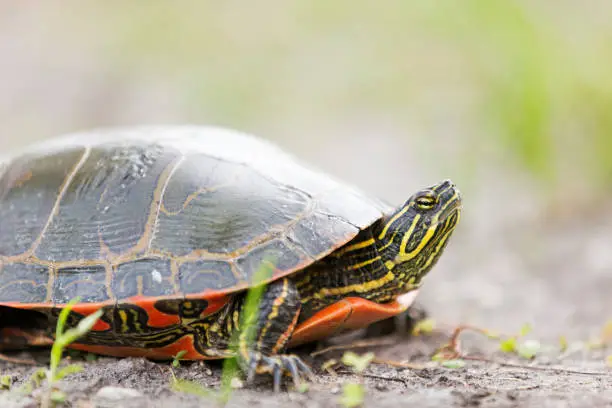
The painted turtle is a highly recognizable species for its bright red color on the underside of its shell and the yellow-green stripes all over its body. They are found from the southern areas of Canada to the northern areas of Mexico. They like to live in more moist areas, typically wetlands, marshes, and ponds. Their diet is mostly plants that grow in the water, rather than fish or insects. In the winter, they will hibernate, like some other species, by burying themselves either in the mud or at the bottom of a body of water.
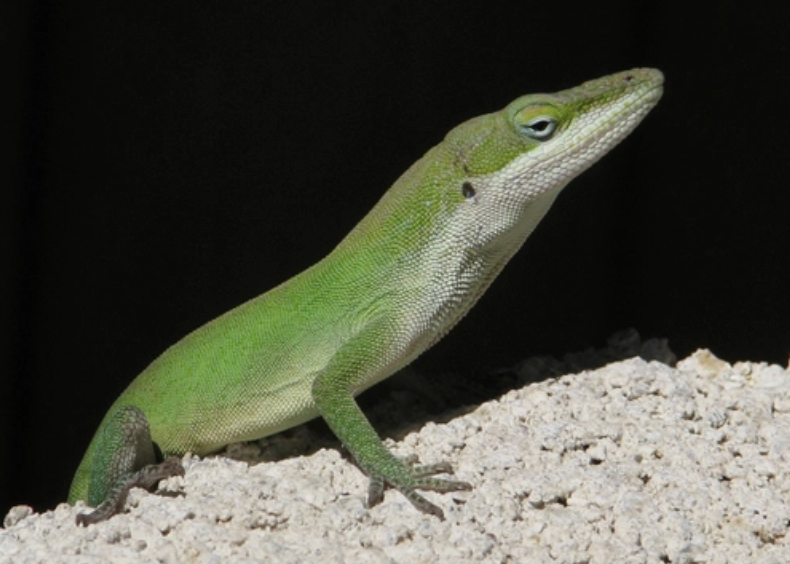
The green anole is a well known species of lizard for its distinctive bright green color and reddish neck flap. Although they are green, they can also change their skin color to brown. They are mostly found in sub-tropical and tropical areas of the United States of America, such as Florida, South Carolina, and Georgia. This species is known to be highly territorial and aggressive, to the point where they will even fight their own reflection. But it is usually the males who have this behavior, and it is usually during breeding season. Male anoles will first show off their colorful neck flap to try to scare the other away, but if that does not work, then they will fight each other, biting and scratching until one of them gives up.
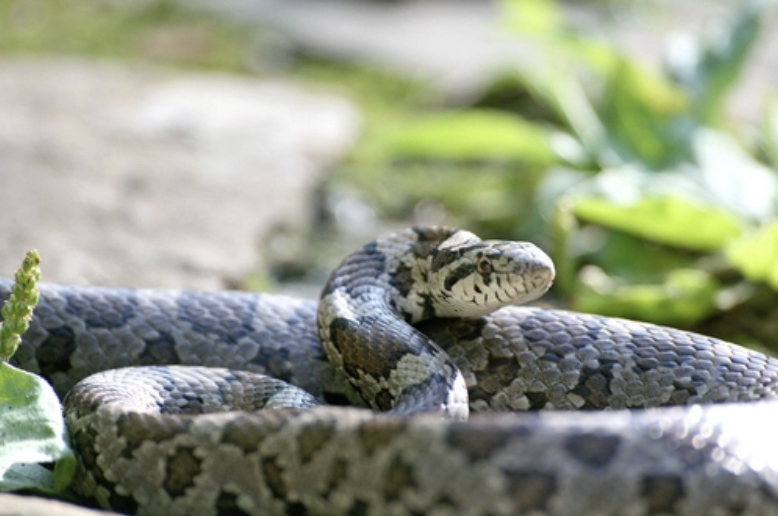
No, this species is not made of milk, and it does not make milk! The eastern milksnake is one of the species of milksnake found in many areas of North America, mostly in the eastern part of the United States of America. Other species though have been found in parts of Canada and in Mexico. This snake's diet is carnivorous, mostly made up of:
- Eggs
- Lizards
- Frogs
- Fish
- Birds
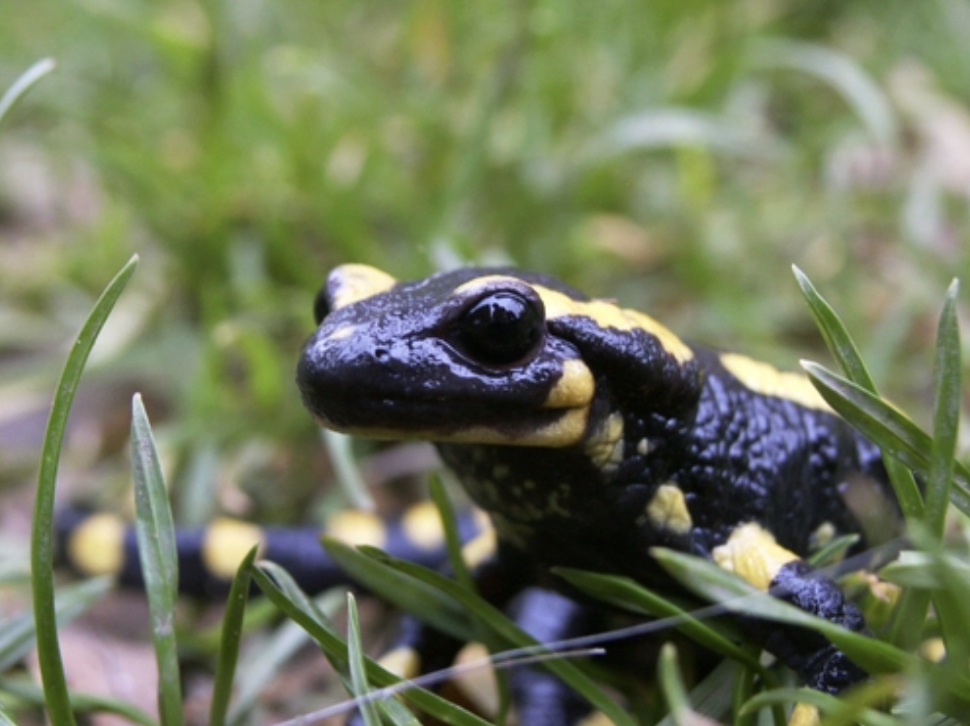
The spotted salamander is a species of amphibian, like frogs and toads, that are found mostly in the eastern part of the United States of America, as well as in areas of Canada. They are well known for their black bodies and their distinctive, bright yellow spots. Their diet is mostly insects, arachnids, and animals that have no bones, such as:
- Spiders
- Earthworms
- Slugs
- Centipedes
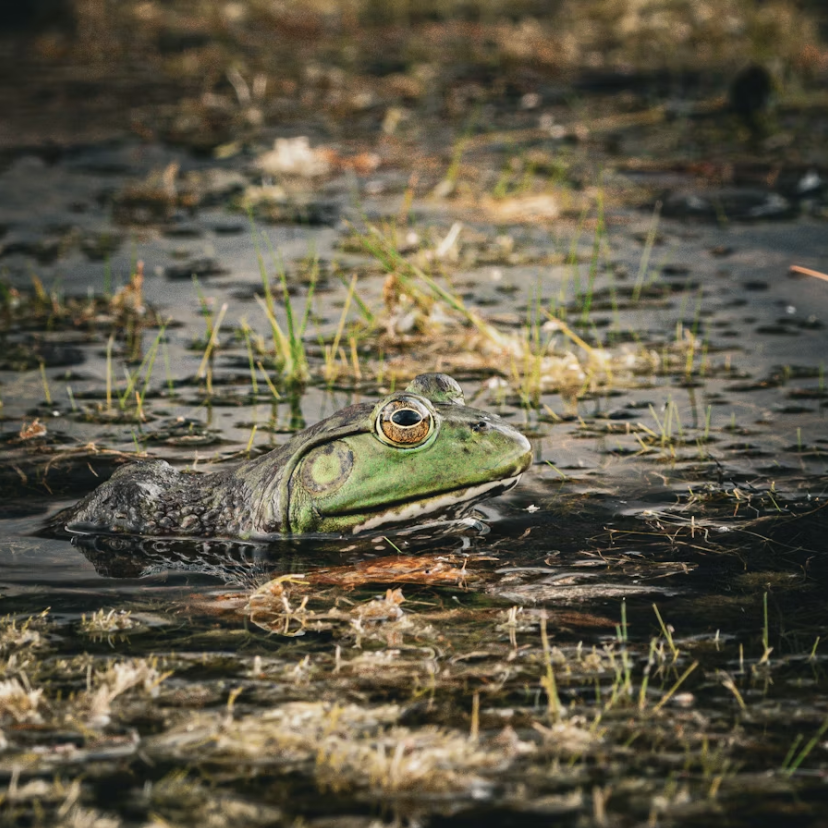
The American bullfrog is one of the biggest true frog species found in North America. They are found mostly in areas of Canada and the United States of America. They are named "bullfrog" because during mating season, the sounds a male bullfrog makes sounds a lot like the sounds of a bull. Their diet is made of all kinds of animals they can fit into their bodies, such as mice, insects, snakes, and even other frogs. Because they eat so many different kinds of animals, and they eat a large amount of them, they are well known as an invasive species.

The brown basilisk, an animal with long toes and a long crest on top of its head, is a lizard that has a very interesting nickname: Jesus Christ Lizard. They have been given this nickname because they can run on water without sinking in, due to skin flaps on their back feet that open. These skin flaps help to cover more area on the water. This species is normally found in areas of Mexico, but they were introduced into Florida, so they can be found in areas there too. Because they have been introduced there, they are unfortunately labelled as an invasive species.